Victoria Jackson-Stanley was a child when, during the race riots of July 24, 1967, two neighborhoods of her hometown of Cambridge, a small town in eastern Maryland, went up in flames.
Today, fifty years after the riots that burned down the part of town where African Americans lived, Victoria Jackson-Stanley serves as mayor of Cambridge and contributes to the development of a unified community that includes both African Americans and white residents.
On the eve of the anniversary of these events, Cambridge is once again reflecting on the turbulent days of July 1967 and doing everything possible to ensure that the unity of the community is never destroyed in the future. Planned events include speeches by civil rights leaders and participants in peaceful protests against the segregation policies pursued by city authorities in those years.
“The memories are very painful, but there is no point in pretending that they are not part of our past,” Victoria Jackson-Stanley, the first African American and first woman to serve as mayor of Cambridge, said in an interview with the Baltimore Sun. “We must acknowledge this and move forward.”
This small town played a huge role in the civil rights movement in the United States. Protests against segregation were led by local resident Gloria Richardson Dandridge. They went down in history as the “Cambridge Movement” and attracted the attention of Martin Luther King, Malcolm X, and Robert Kennedy.
The mayor’s memories
Victoria remembers well what happened in the city in 1963, when the governor sent the Maryland National Guard to Cambridge to quell an outbreak of violence when demonstrators, their opponents, and police clashed.
“I remember armed National Guardsmen on the corner of Park Lane and High Street,” Victoria says.
Because of his involvement in the civil rights movement, her father lost his job several times, was threatened, and Victoria was very concerned for his safety.
Today, the mayor of Cambridge thinks about the future of the city where she has spent her entire life. “I love my city,” says Victoria. “In my church alone, I can count seven generations.”
A changing economy
In the first half of the 20th century, Cambridge’s main employer was the Phillips Packing Company, at that time the world’s largest packer of tomato products. In the early 1960s, the company closed, leading to the loss of thousands of jobs and mass unemployment among African Americans.
In the decades that followed, a wide variety of manufacturers came and went from Cambridge, including a company that produced canned tuna, a firm that printed an annual yearbook, and even an aerospace company that fulfilled government contracts.
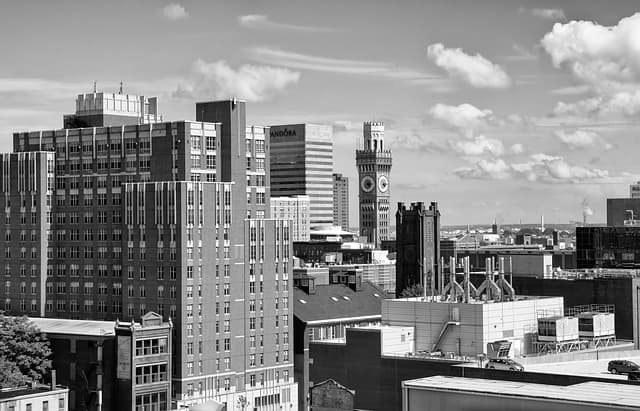
Today, tourism is the main industry in Cambridge’s economy. Like most other large and small cities on the east coast of the United States, Cambridge has picturesque views and an interesting historic center located along Race Street. Local businesspeople hope that their city will be able to compete with other, more prosperous neighboring cities such as Salisbury and Easton.
Today, the main industry in Cambridge’s economy is tourism. Like most other large and small cities on the east coast of the United States, Cambridge has picturesque views and an interesting historical center located along Race Street. Local businessmen hope that their city will be able to compete with other, more prosperous neighboring cities such as Salisbury and Easton.
The county to which Cambridge belongs is the birthplace of the famous abolitionist Harriet Tubman. A new museum has opened in the city, and a national park has been established nearby in her honor.
Young leaders are coming
Dion Banks, 45, is too young to remember the unrest of the 1960s. Although his parents were involved in the civil rights movement, he did not know for a long time that his hometown was at the center of events.
Immediately after the hearings, activists planned an event for July 2017 to mark the 50th anniversary of those events. “Here in Cambridge, we have a rich history of civil rights activism, but little is known about it,” Dion said.
Brett Summers moved to Cambridge from Washington, D.C., in 2000, when he was 36. Like other recent arrivals to the city, he is referred to here as an “outsider.” Summers is one of the eight founders of the Cambridge Venture Fund, which invests in forward-thinking urban projects.
“There are a lot of great restaurants in Cambridge,” says Brett. “Our goal is to keep these establishments in the center of the city. We want people to feel that they can spend their money and have a great time not somewhere else, but right here in Cambridge. To create this environment, we need more retail businesses, so we are willing to invest our money where bankers are not investing theirs.”
The group invests up to $50,000 in new retail businesses, financing the purchase of goods, interior renovations, and helping with working capital. Loans are issued for five to seven years.
Remembering the past and looking to the future
In July, as part of the anniversary celebrations in Cambridge, there will be a discussion entitled “Reflections on Pine Street.” It will look back on Cambridge at different times—the era of the civil rights struggle and the period when the Phillips factory was in operation, when the town had two thriving centers, one of which was African American.
In those years, Pine Street had a second name – “Black Wall Street” (by analogy with New York’s financial district). Its music bars and restaurants were part of a network of African-American entertainment venues known as the Cyttle Circle. “It was like a little New York,” says Dion Banks. “All the great artists performed here, such as James Brown, Cab Calloway, and many others.”
This was the prosperity that the city strives for today. Unfortunately, economic hardship and segregation policies destroyed it. One of the civil rights activists, Dandridge (now 95), will take part in “Reflections on Pine Street.” There will be a festive parade and a walking tour for tourists. Public hearings on racial issues will continue.
Cambridge residents are doing everything possible to develop their city: even the old Phillips factory building will house a brewery and a business incubator supporting local entrepreneurs. While discussing its past, the community looks confidently to the future.
“Our economic base has shrunk significantly since Phillips and other industrial enterprises left,” says Victoria Jackson-Stanley. “Our goal today is to rebuild it.”